How to Tell High-Rise Leggings Will Stay Up Before You Ever Buy Them
Quick Answer: Leggings slide down for reasons visible before purchase: a waistband wider than your natural waist curve, a rise that puts the band on the wrong part of your torso, elastic that folds instead of anchoring, and fabric that grows with heat and wear. Five fitting-room checks - the squat-and-reach, the band-fold test, the two-finger stretch, the rise measurement against your own torso, and a look at the construction inside - predict stay-up behavior with startling accuracy. No check requires wearing them longer than three minutes.
Every pair that ever walked down your hips mid-errand passed the mirror test on day one. Standing still in a fitting room is the one activity leggings never fail - which is why you have to make them fail there on purpose.
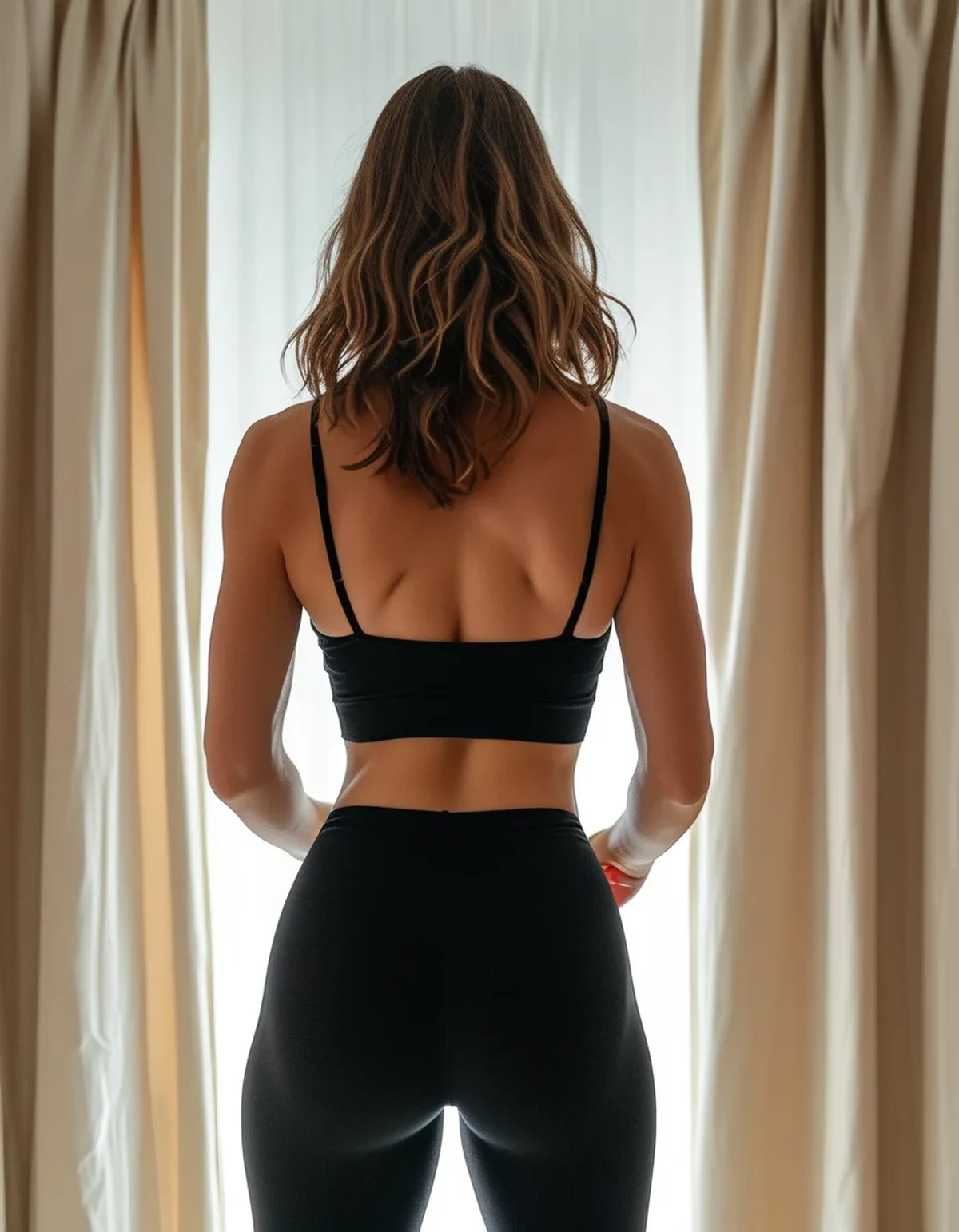
Why high-rise leggings slide down in the first place
The slide is physics, and the physics is checkable.
A waistband stays up by gripping a taper. Your natural waist is the narrowest point of your torso; a band sitting there is anchored because sliding down would require stretching wider over your hips. A band that sits above or below that taper has no anchor - it is a stretched loop on a slope, and gravity plus movement will walk it downhill all day.
Rise length decides where the band lands. If the rise is too long for your torso, the band overshoots your waist and sits on the softer area above it, where there is nothing to grip - the classic fold-then-slide. Too short, and the band parks on the widest part of your hips, the single most slide-prone position. This is why the same pair stays up on one friend and migrates on another: different torso lengths, same rise.
Elastic quality shows up as recovery, not tightness. A band can feel firm and still be lazy - what matters is how fast it snaps back after stretching. Fabric and elastic that recover slowly loosen within one wear, which is why some yoga pants fit at 9am and slide by noon; body heat and motion have grown them and the elastic did not fight back.
Compression down the leg matters more than people think. The legging is one connected tube: when thigh fabric is tight and the knee bends thousands of times, the fabric borrows length from the nearest reservoir - the waistband. Squat-proof density through the seat and thigh takes load off the band; thin stretchy fabric feeds on it.
And drawcords are a confession. A drawcord is the designer telling you the band cannot hold position alone. Useful feature, honest signal - read it.
The five fitting-room tests that predict the slide
Three minutes, in this order.
1. The squat-and-reach. Do three full deep squats, then stand and reach both arms overhead like you are shelving something heavy. Now look: if the band moved down even half an inch, it will move two inches by mile two of anything. A band that returns to position on its own as you stand - without your thumbs - is the single strongest pass signal there is.
2. The band-fold test. Sit down in the fitting-room chair, lean forward like you are tying a shoe, and hold for ten seconds. Stand up. A band that folded over on itself while seated has told you its future: folding is how the slide starts, because a folded band halves its grip surface. The wide bands on well-cut buttery-soft leggings are lovely precisely until they fold - fold behavior matters more as bands get wider.
3. The two-finger stretch. Pull the band away from your body at the side seam. Two fingers of give: right. Four or more: the band is already loose and heat will make it looser. Barely one finger: it will dig, and you will roll it yourself by afternoon - a self-inflicted slide.
4. Match the rise to your torso, not the chart. Measure once at home from the crease of your hip socket to your natural waist while seated. Compare against the listed front rise. A rise within about half an inch of landing the band at your natural waist is the target; anything designed to end above or below your taper is a slide waiting for a schedule.
5. Look inside. Flip the band. A separate elastic channel or firm internal elastic strip beats folded-over self-fabric alone. Silicone gripper strips, a proper gusset, and flat interior seams all correlate with brands that engineered for stay-up rather than for the mirror.
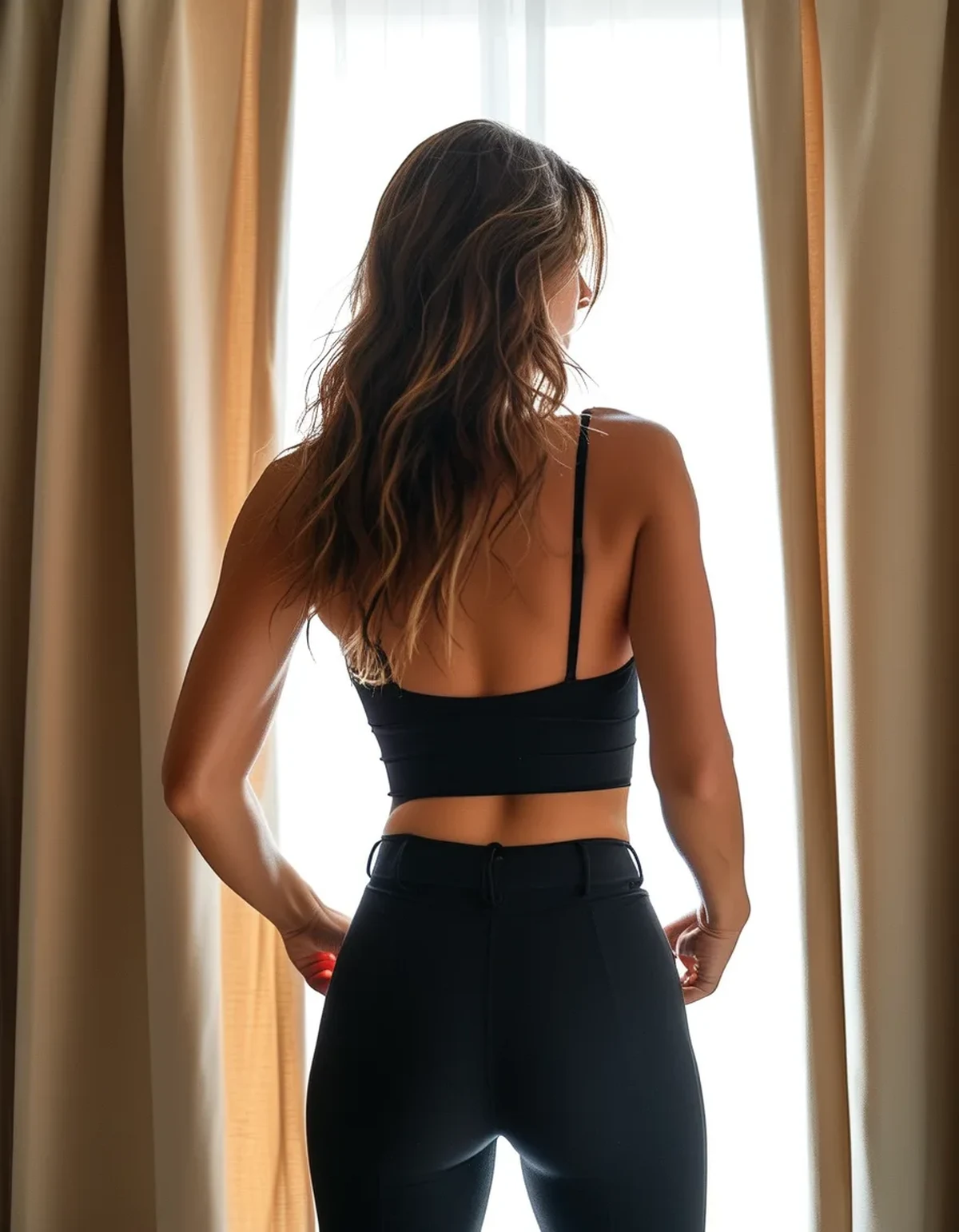
What Nobody Tells You About Waistband Behavior
Leggings are at their best in minute one and their truest at minute ninety. Warm fabric is looser fabric - every legging relaxes slightly with body heat. Quality is not whether they loosen; it is how far and whether the elastic claws it back. This is exactly why the fitting-room squats matter: they fast-forward the warming.
The size-down myth causes half the slides it claims to fix. Sizing down makes thigh compression fiercer, which increases the downward borrowing from the band during every knee bend. A smaller size with the wrong rise slides worse than the right size with the right rise. Slide is a geometry problem before it is a tightness problem.
Bodies are not slide-neutral, and that is fine. A shorter distance between ribs and hips, a straighter waist, a recent change in weight, postpartum months where the taper is temporarily softer - all of these reduce what a band can grip. None of them are flaws; they are fit variables, and they mean the rise number matters more for you, not that leggings are not for you.
Pocket cargo is a stealth saboteur. A phone in a side pocket adds bounce with every stride, and bounce is a downward force applied hundreds of times per mile. If your test pair passes empty but you live with a phone in the pocket, do one squat set with your phone in it. The good pairs barely notice.
Washing habits decide year two. Heat is elastic’s enemy: hot dryers age a waistband faster than a hundred workouts. Cold wash, hang dry, and the stay-up behavior you tested for survives the season instead of the month.
And the honest one: some pairs are designed for the shelf. A tall, soft, unstructured band photographs beautifully folded on a table. Grip is invisible in photos. Shop like someone who knows what the photo cannot show.
Reading fabric and construction like a skeptic
You can rank stay-up odds from the product page alone.
Fabric weight and composition first. Mid-to-heavyweight knits with roughly 20-30 percent elastane hold structure and recover; ultralight fabrics feel incredible and surrender early. If the description leans entirely on softness adjectives with no mention of compression, support, or recovery, assume the band is decorative.
Interlock and dense circular knits beat loose brushed knits for grip endurance - brushed interiors are fine, but brushing plus very light weight is the combination that grows. Squat-proof marketing language, whatever else it implies, usually correlates with density that protects the waistband too.
High-rise needs more engineering, not just more inches. A quality high rise shows its work: a contoured band that is taller at the back than the front, seamed V-shaping at the spine, internal elastic listed in the details, sometimes a discreet drawcord for load days. A perfectly rectangular tube of self-fabric labeled high-rise is the version that folds.
Reviews are a slide database if you query them right. Search the reviews for roll, slide, fold, and dig - not the star average. Fifty five-star mirror selfies matter less than three specific reports of the band folding on curvier waists or sliding during runs. Note reviewer heights: rise complaints cluster by torso length, and finding reviewers shaped like you is the closest thing to a remote fitting room.
Price predicts less than construction does. Expensive pairs with fashion-first bands slide; mid-priced pairs with boring engineered bands hold for years. Pay for the boring parts.
Run the same skepticism across categories: the stay-up bar is higher for running than for brunch, so test the pair you will actually sweat in at the intensity you will actually reach.
FAQ: High-Rise Stay-Up Questions, Answered
Why do my leggings fit in the store but slide at home?
Because the store test was standing still for ninety seconds and home is heat, motion, sitting, and stairs. Warm fabric relaxes; weak elastic does not recover; the wrong rise has no anchor. The fitting-room squat-reach-sit sequence exists to compress a day of wear into three minutes.
Should I size down so the waistband grips harder?
Usually no. Extra thigh compression increases the downward tug on the band with every step, and a band on the wrong part of your torso slides at any tightness. Fix rise placement and band construction first; change size only if the two-finger stretch says the whole garment is loose.
Is a drawcord an admission the leggings are badly made?
It is an honest accommodation, not a defect - useful for high-output workouts, phone-in-pocket days, and bodies with a subtle waist taper. But if a pair cannot stay up without the cord cinched hard on an ordinary walk, the band failed the job the cord was meant to assist.
Do wide waistbands stay up better than narrow ones?
Wider bands distribute pressure and feel better, but they only out-grip narrow ones when they resist folding - a wide band that folds becomes a narrow band with extra fabric. Check fold behavior seated; that is where wide bands earn or lose their reputation.
My leggings used to stay up and now they slide. Are they done?
Elastic ages - heat drying accelerates it - and a band that has lost snap-back rarely regains it. Demote the pair to low-motion days, switch the survivors to cold wash and air dry, and apply the fitting-room tests to their replacement while it is still returnable.
TL;DR:
- Bands stay up by gripping the natural waist taper; the wrong rise length parks them where there is nothing to hold.
- Squat-and-reach, seated fold test, two-finger stretch, rise-versus-torso measurement, and a look at internal construction predict the slide before purchase.
- Warmth loosens every legging - quality is how fast the elastic recovers, so fast-forward it with movement in the fitting room.
- Sizing down usually worsens slide; density through the seat and thigh, engineered contoured bands, and boring construction details prevent it.
- Cold wash and air dry preserve the exact elastic behavior you tested for.
A waistband tells you everything in three minutes of squats, sits, and reaches - the only question is whether you ask before the receipt or after.
See It in Motion
Seen here: High Waist 8” Yoga Shorts — shop similar styles on bubblelime.com
Keep Reading
This article is for general informational and styling purposes only. Fit, sizing, and product availability may vary.