Why High-Rise Leggings Feel Perfect in the Shop and Wrong at Home
Quick Answer: Fitting rooms test a garment for two minutes, standing, in a cool room, before eating. Real wear adds hours of movement, body temperature rise, fabric relaxation, and a meal — all of which change how a high-rise waistband sits. The most useful fitting-room test is not standing still in the mirror; it is a squat, a forward hinge, and two minutes of sitting.
The leggings did not change. The test did.

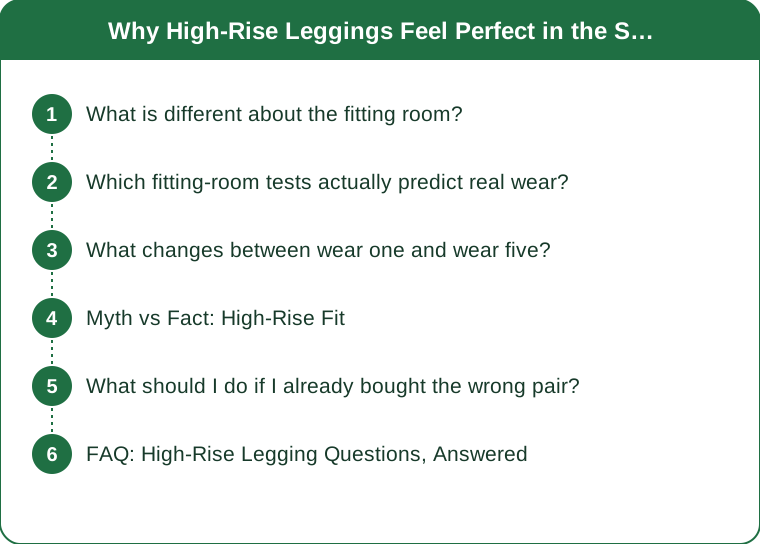
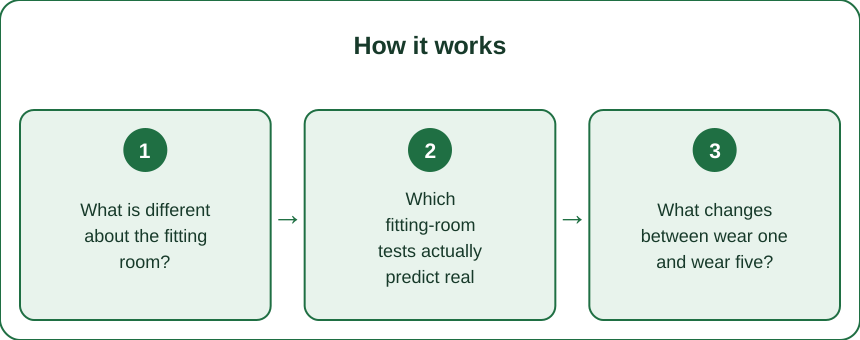
What is different about the fitting room?
It is cool and you have not warmed up. Body temperature rises during activity and slightly during a normal day, and skin and fabric interact differently when warm.
You are standing still. Almost every high-rise waistband problem — rolling, digging, sliding — appears during movement, not during standing.
You have not eaten. Waistband pressure on the abdomen changes noticeably after a meal, and a high rise sits directly across the part that changes most.
The fabric is at its firmest. New technical fabric relaxes over the first few wears and washes. What feels supportive in the shop can feel loose by wear four, or vice versa if it shrinks slightly.
Which fitting-room tests actually predict real wear?
A full squat, held for five seconds. This tests waistband roll-down and fabric opacity simultaneously, which are the two most common regrets.
A forward hinge with straight legs. This is where a high rise digs in at the front, and it is the movement that predicts eight-hour comfort better than any other.
Two minutes seated. Sit down and stay down. Digging that appears within two minutes will be intolerable within two hours.
A few steps and a knee lift. Waistband slide shows up in movement and never in standing.
Check the fabric under the light, squatting, from behind if you can. Opacity under tension is the thing product photos never show.
What changes between wear one and wear five?
Elastane relaxes and then recovers. Good fabric returns to shape after each wear; poorer fabric progressively loosens, which shows up first at the waistband and knees.
The first wash is the biggest single change. Some fabrics tighten slightly, some soften. Buying two of a pair you love is safer than assuming the second pair years later will behave identically.
Body composition and fluid retention vary through the month and the season. A waistband at the edge of comfortable will be uncomfortable some weeks and fine others.
Washing errors accelerate everything. Fabric softener coats elastane and degrades recovery; hot washes and tumble drying shorten waistband life substantially.

Myth vs Fact: High-Rise Fit
Myth: A tighter waistband stays up better. Fact: Beyond a point, excess tension causes roll-down rather than preventing it. Waistband width and construction hold a legging up; compression alone does not.
Myth: Rolling means the size is too small. Fact: Rolling frequently indicates the rise is wrong for your torso length, not that the size is wrong. A short torso in a very high rise rolls regardless of size.
Myth: If it is see-through in the shop it will be worse at home. Fact: It will be about the same, but you will be in daylight and squatting rather than in flattering fitting-room light and standing. Test under tension before buying.
Myth: Sizing up fixes digging. Fact: Sizing up in leggings usually produces sliding and sagging while the waistband still digs, because the waistband is the part least affected by grading.
Myth: All high-rise waistbands are the same height. Fact: They vary by several centimetres between brands and lines, and that variation is exactly what determines whether a pair works on your torso.
What should I do if I already bought the wrong pair?
Check the return window before wearing them outside. Most brands accept unworn returns and almost none accept worn ones.
If they roll, try wearing them slightly lower than the intended rise. Many rolling problems are a rise sitting above the natural waist on a shorter torso.
If they dig when seated, keep them for training only. An hour of movement is a different demand from eight hours at a desk.
If they slide down during activity, they are probably too large, and no amount of adjustment fixes it. This is the one failure mode that does not improve.
Record what went wrong. Brand, line, size, and the specific failure. Three entries in that list makes the next purchase far more accurate than any size chart.
FAQ: High-Rise Legging Questions, Answered
How do I know my torso length is the issue?
If high-rise garments consistently sit above your natural waist and roll, and mid-rise ones sit at the waist and feel fine, torso length is the variable rather than size.
Do the leggings stretch out permanently?
Quality fabric recovers; cheaper blends progressively loosen. If a pair feels looser every wear without washing, the recovery is failing and it will not come back.
Why do they feel tighter under autumn layers?
Additional layers add pressure and warmth at the waistband, and a rise that was borderline in a single layer becomes noticeable under a waistband-height jumper or jacket.
TL;DR:
- Fitting rooms test two minutes standing; real wear is eight hours moving, warm, and after a meal.
- Squat, hinge, and sit for two minutes before buying — those three predict almost everything.
- Rolling usually means the rise is wrong for your torso, not that the size is.
- Sizing up produces sliding without fixing digging.
- Skip fabric softener and hot washes; both destroy waistband recovery.
Test for the day you will actually have, not the two minutes you are having.
See It in Motion
Seen here: High Waist Yoga Leggings with Side Pockets — shop it on bubblelime.com
Keep Reading
This article is for general informational and styling purposes only. Fit, sizing, and product availability may vary.