Why the Rise That Works in Your Leggings Fails Completely in Shorts
Quick Answer: A legging’s full leg anchors the waistband from below - the fabric down your thigh and calf is under tension and holds the waist in place. Shorts have far less fabric doing that job, so the waistband takes almost all the movement load alone. That is why the same rise height rolls in shorts and holds in leggings. Look for a longer inseam, a wider waistband, silicone grip or a drawcord, and a fabric with real recovery rather than just stretch.
Your leggings sit exactly where you put them all session. Your shorts are somewhere else by the warm-up.
Same waist measurement, same rise, same brand sometimes. The variable is what is happening below the waistband.
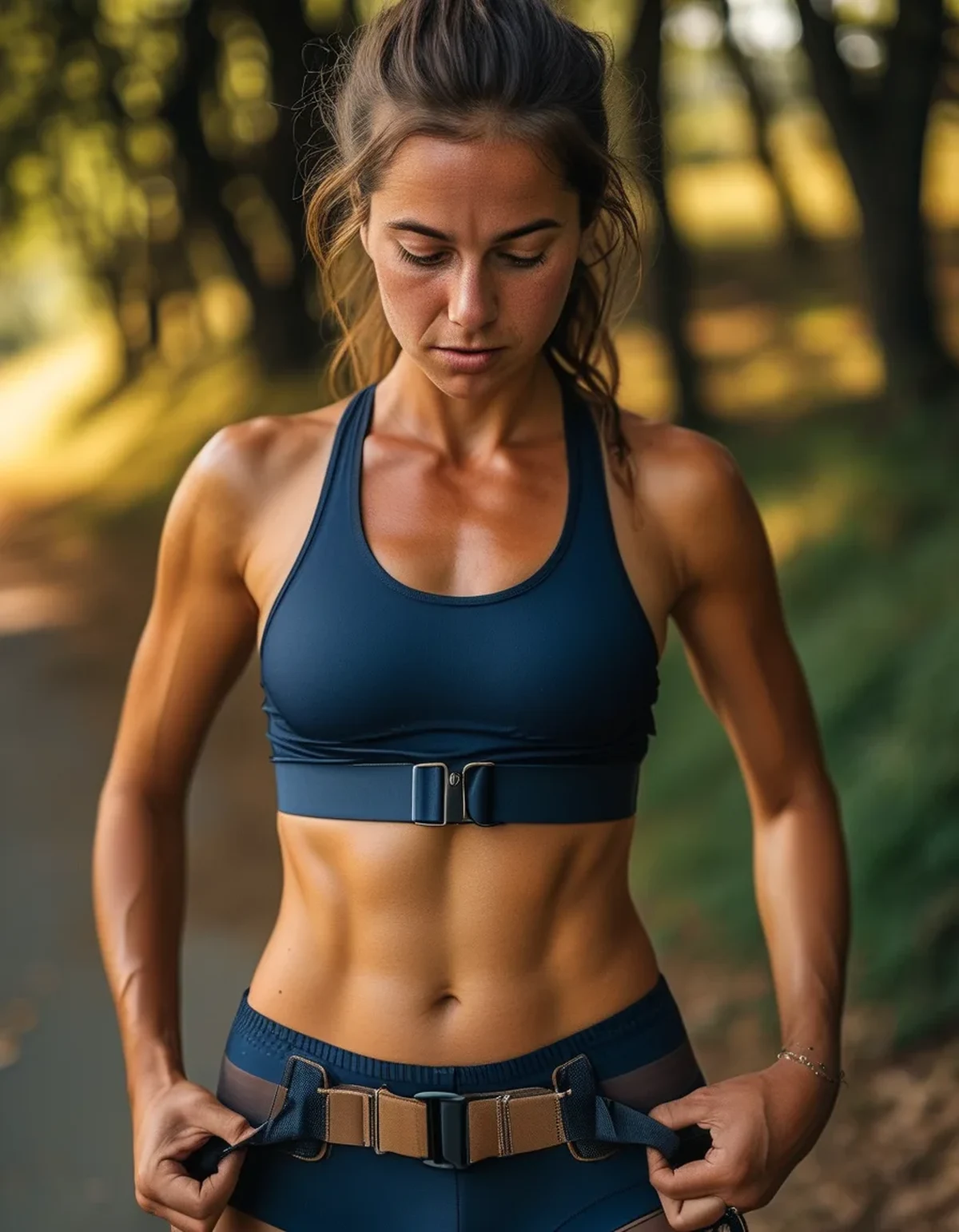
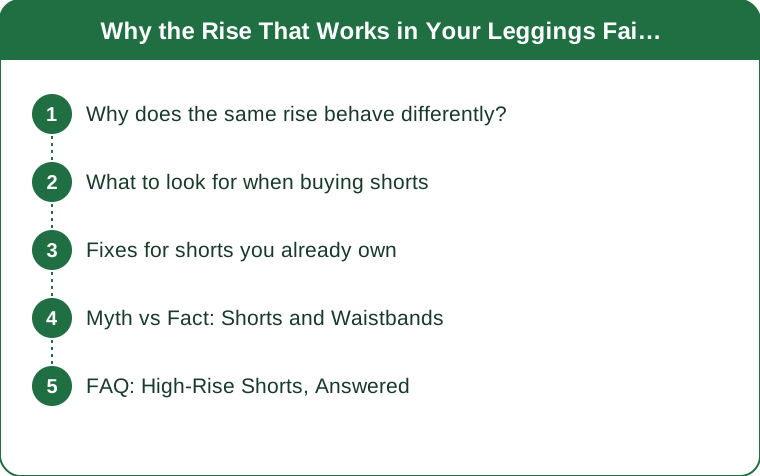
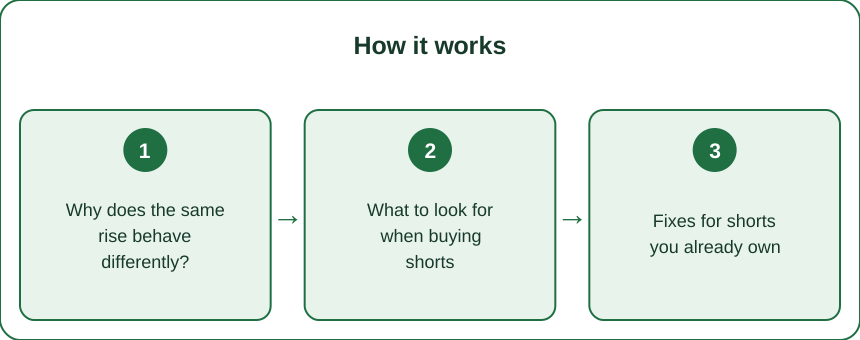
Why does the same rise behave differently?
Leggings are anchored along their entire length. The fabric down the thigh and calf is under mild tension against your leg, and that tension pulls downward on the waistband continuously, holding it flat and in place.
Shorts lose most of that anchoring. A five-inch inseam has a fraction of the contact area, so the waistband is doing nearly all the work of staying put with very little help from below.
Every step is an input into the waistband. Hip flexion pushes the front of the waistband up, and without downward tension from the leg, it has nowhere to go but over itself - which is what rolling actually is.
The hem of shorts creates its own upward force. As your thigh moves, the hem rides up, and that upward migration transfers to the waistband rather than being absorbed by fabric further down the leg.
Thigh movement is also larger in shorts, because there is no compression along the leg to damp it. More movement means more force cycling through a single band of fabric.
And the waistband on shorts is often narrower, because a wide band looks disproportionate on a short garment. Narrower means less surface area gripping and more pressure per centimetre, which is the exact combination that rolls.
What to look for when buying shorts
Longer inseam solves the most. A seven or nine inch inseam has meaningfully more anchoring fabric than a three or five inch one, and it is the single most reliable predictor of whether shorts stay put.
A wide waistband distributes force better. Look for at least three inches on high-rise shorts. Narrow bands concentrate pressure and fold at the point of highest force.
Silicone grip on the inside of the waistband works, and it works particularly well on shorts because the waistband is doing so much of the job alone. It is common in cycling shorts and underused elsewhere.
An internal drawcord is worth more in shorts than in leggings, for the same reason. If the shorts have one, use it - most people leave it tied loose from the factory.
Check recovery, not stretch. Pull the waistband and release. If it snaps back with no distension line, it will hold. If it hesitates, it will roll within a few wears regardless of how it fits in the shop.
Compressive fabric outperforms soft, buttery fabric for staying put. The plush hand-feel that makes leggings pleasant comes from a fabric with more give, and give is what allows migration.
And a gusseted crotch reduces the twisting that contributes to migration - it is a construction detail visible from the inside and it correlates well with overall quality.
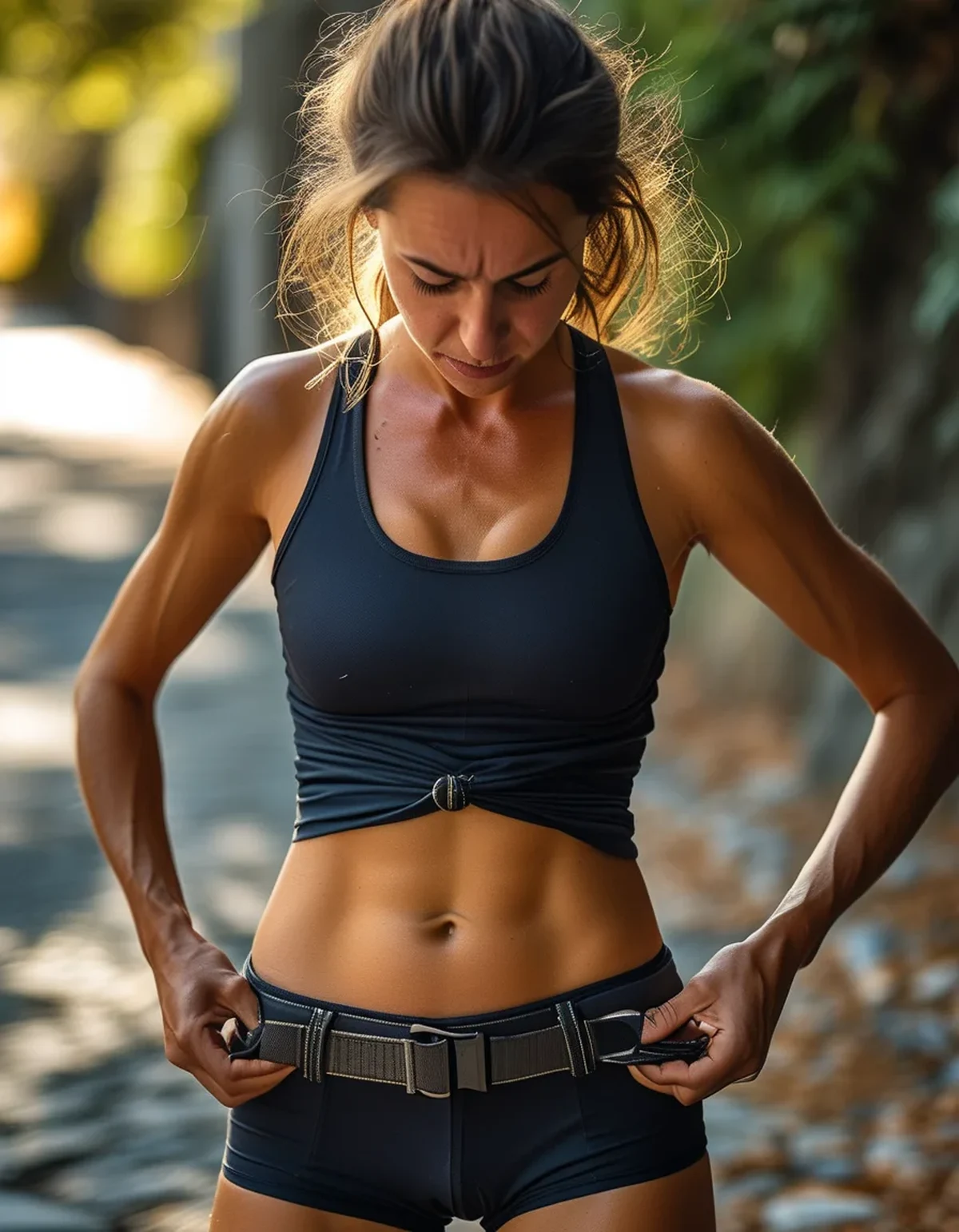
Fixes for shorts you already own
Size down in the waist if there is any looseness at all. Unlike leggings, shorts have no leg tension to compensate for a waist that is fractionally big. The waist needs to be genuinely snug.
Tie the internal drawcord properly. If your shorts have one, adjust it to actually hold rather than leaving it at the factory setting. This resolves a surprising share of complaints.
Fold the waistband down once, deliberately. Rolling the band down a single fold before you start creates a thicker, more stable band that migrates less than a full-height one that folds itself.
Wear them over rather than under a fitted top. A tucked layer adds friction against the waistband and helps it stay put, which is why the same shorts behave differently with different tops.
Avoid fabric softener on them entirely. It coats the elastane and accelerates the recovery loss that causes rolling. This is the most common self-inflicted cause of a good pair going bad in one season.
Wash cold and air dry. Heat is what kills waistband recovery, and shorts show that loss faster than leggings because the waistband is under more relative load.
And accept that some pairs cannot be fixed. A short inseam with a narrow waistband in a soft fabric is a design that will roll on most bodies, and no adjustment changes that.
Myth vs Fact: Shorts and Waistbands
Myth: If shorts roll, they are too small. Fact: too loose is the far more common cause. With no leg tension to help, the waist needs to be genuinely snug - looseness has nothing to anchor it.
Myth: A higher rise always stays up better. Fact: in shorts, rise height matters less than waistband width and inseam length. A high rise with a narrow band rolls readily.
Myth: Rolling is a body shape problem. Fact: it is primarily a construction problem. Inseam length, waistband width, grip, and fabric recovery predict rolling far better than body shape does.
Myth: Softer fabric is better quality. Fact: the plushest fabrics have the most give, and give is what allows migration. Compressive fabric is less pleasant on the hanger and stays put considerably better.
Myth: The drawcord is decorative. Fact: in shorts it does real work, precisely because the waistband is unassisted. Most people never adjust it from the factory setting.
Myth: All bike shorts stay put. Fact: cycling-specific shorts often do, because they combine a long inseam with silicone grip. Fashion bike shorts frequently have neither and behave like any other short garment.
FAQ: High-Rise Shorts, Answered
Why do my shorts roll when my leggings do not?
Leggings are anchored by fabric tension down the whole leg, which holds the waistband in place. Shorts have far less of that, so the waistband absorbs almost all the movement alone.
What inseam length stays put best?
Seven to nine inches. The extra fabric provides real anchoring, which is why longer bike shorts stay put where a three-inch short does not.
Should I size down in shorts?
In the waist, yes, if there is any looseness. Shorts need a genuinely snug waist because nothing below is helping to hold it.
Does the waistband width matter more than the rise?
Yes. At least three inches of waistband distributes force well; a narrow band concentrates it and folds. Rise height matters less than most people assume.
Why did my shorts start rolling after a few months?
Elastane recovery loss, usually accelerated by fabric softener or tumble drying. Wash cold, air dry, and skip softener entirely.
Is there a fix for shorts that already roll?
Tie the drawcord if there is one, fold the band down once deliberately, and wear a tucked top for friction. Some designs - short inseam, narrow band, soft fabric - cannot be saved.
TL;DR:
- Leggings anchor the waistband with fabric tension down the whole leg; shorts have far less of it, so the band works alone.
- Inseam length is the strongest predictor of staying put - seven to nine inches beats three to five.
- Look for a waistband at least three inches wide, silicone grip, a usable drawcord, and fabric with real recovery.
- A loose waist is the more common cause of rolling than a tight one, because there is nothing below to help.
- Fabric softener and tumble drying kill waistband recovery, and shorts show it faster than leggings do.
Some shorts are designed to roll. A short inseam plus a narrow band plus soft fabric cannot be adjusted into working.
See It in Motion
Seen here: High Waist 8” Yoga Shorts — shop similar styles on bubblelime.com
Keep Reading
This article is for general informational and styling purposes only. Fit, sizing, and product availability may vary.