Why High-Rise Leggings Fit Differently After Every Wash
Quick Answer: Heat and detergent are what change the fit. Hot water and dryer heat degrade the elastane in the waistband — permanently and cumulatively — while fabric softener coats the fibers and blocks their recovery. The tight-then-loose cycle you notice is elastane relaxing after wear and only partially recovering in the wash. Cold water, no softener, and no dryer keeps a high-rise waistband true for years instead of months.
Straight out of the wash they’re snug enough that you wonder if they shrank. Two hours into wearing them, they’ve given up at the waist.
Both things are real, and they’re the same story at different points.

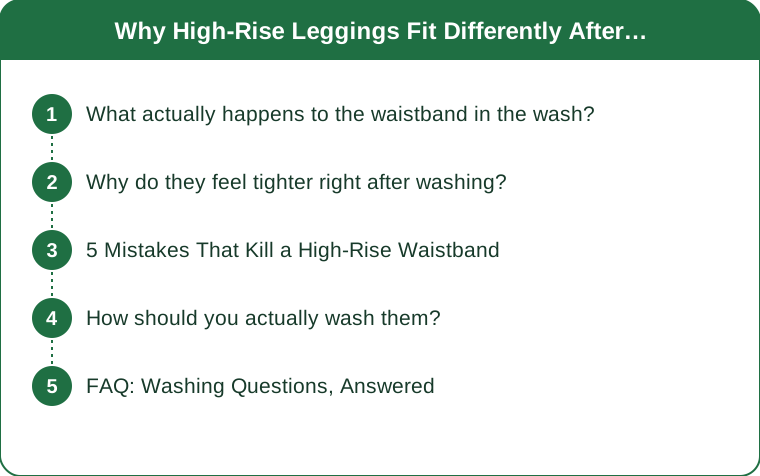
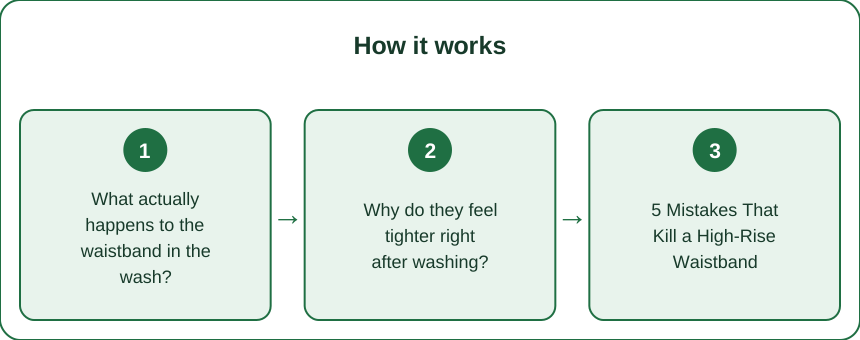
What actually happens to the waistband in the wash?
A high-rise waistband is typically a nylon or polyester blend with somewhere between 12% and 25% elastane (spandex, Lycra — same fiber, different names). The elastane does all the recovery work. Everything else is just surface.
Elastane has two enemies, and your laundry routine probably includes both.
Heat is the serious one. Elastane fibers break down with heat exposure, and the damage doesn’t reverse. Hot water starts it; a dryer finishes it, because dryer heat is both higher and sustained. Each cycle removes a little more of the fiber’s ability to snap back. This is the mechanism behind a waistband that used to hold and now doesn’t.
Fabric softener works by depositing a thin waxy coating on fibers to make them feel smooth. On cotton that’s pleasant. On elastane it fills the space the fiber needs to stretch and recover, so the waistband both grips less and wicks worse. Dryer sheets do the same thing by a different route.
Then there’s the temporary version. During wear, elastane stretches and slowly relaxes under sustained load — that’s the fit loosening over your day. A wash and full dry lets the fiber recover most of the way, which is why they feel tight again coming out. As long as the fiber is healthy, this cycle repeats indefinitely. Once heat has degraded it, the recovery half stops happening and only the loosening remains.
Why do they feel tighter right after washing?
Two things overlap, and separating them tells you whether anything is wrong.
Elastane recovery is the honest one. The fiber returns toward its resting length after being held stretched for hours. Nothing shrank; it went back. This is what a healthy waistband is supposed to do, and it’s a good sign.
Actual shrinkage is the other, and it applies mostly to the non-stretch components. Nylon and polyester don’t shrink much, but they can tighten slightly under high heat — and any cotton content in a blend will shrink meaningfully. If your leggings feel tight everywhere, including the length, and stay that way after a full day of wear, that’s shrinkage rather than recovery.
How to tell them apart: wear them for an hour. Recovery-tightness eases into a normal fit. Shrinkage doesn’t ease — it stays tight all day, which is when you know the damage was done in the machine.

5 Mistakes That Kill a High-Rise Waistband
1. Washing warm because they’re workout clothes. The instinct is that sweaty clothes need heat to get clean. They don’t — modern detergent works fine in cold, and sweat is water-soluble. Cold water is the single highest-value change on this list.
2. Any amount of fabric softener. Not less, not occasionally. The coating accumulates and it’s difficult to remove. Skip it entirely on anything with elastane, and skip dryer sheets for the same reason.
3. The dryer, on any setting. Even low heat is sustained heat for 40 minutes. Air-dry flat and they’ll be ready in a few hours; hung by the waistband, the weight of wet fabric slowly stretches the very part you’re trying to protect.
4. Letting them sit damp in a gym bag. Beyond the smell, prolonged moisture plus body oils breaks down elastic fibers. Hang them up when you get home, even if you can’t wash them yet.
5. Washing them inside a load with towels or jeans. Abrasion from heavy fabrics wears the waistband’s surface and pills the face of the fabric. Wash activewear together, ideally inside out, and use a mesh bag if the load includes anything with zippers or hooks.
How should you actually wash them?
The whole routine, and it’s shorter than you’d think:
1. Turn them inside out. The inside is what touched your skin — that’s the side with the body oils and sweat that need the contact with detergent. It also protects the outer face from abrasion.
2. Cold water, gentle cycle. Cold is non-negotiable. Gentle reduces mechanical stress on the seams and waistband.
3. Use less detergent than you think. Excess detergent doesn’t rinse out fully from technical fabrics and builds up, leaving them feeling slick and holding odor. Half the recommended dose is usually right for a load of activewear.
4. No softener, no bleach. Bleach destroys elastane outright.
5. Air-dry flat, out of direct sun. Flat matters — hanging by the waistband puts the entire weight of wet fabric on the elastic. UV also degrades elastane, so don’t dry them on a sunny balcony rail.
For odor that survives washing: soak in a solution of cold water and a cup of white vinegar for 30 minutes before the regular wash. This strips accumulated detergent and body oil without heat. Once a month is plenty.
One realistic note: elastane is a consumable. Even treated perfectly, a waistband loses some recovery over a few years of regular wear. Good care buys you years instead of months — it doesn’t buy forever.
FAQ: Washing Questions, Answered
Can I ever put leggings in the dryer if I’m in a hurry?
Occasionally on the no-heat or air-fluff setting won’t do damage, since the problem is heat rather than tumbling. Any heated setting costs you fiber life every time, and it accumulates.
Will washing bring back a waistband that’s already stretched out?
Partially, if the elastane is still intact — one wash and full dry restores most of a day’s relaxation. If it’s heat-damaged, no. A waistband that comes out of the wash still loose is telling you the fiber is done, and no washing routine will reverse that.
Does hand washing actually help?
It’s gentler, but a cold gentle machine cycle is close enough that most people won’t see a difference. If you’re going to spend effort somewhere, spend it on skipping the dryer — that matters far more than how the washing happened.
TL;DR:
- Heat is what permanently degrades a high-rise waistband; fabric softener blocks the fiber’s recovery.
- Tight-after-washing is normal elastane recovery, not shrinkage — it should ease within an hour of wear.
- Cold water, gentle cycle, inside out, half the usual detergent, no softener, no dryer.
- Air-dry flat rather than hanging by the waistband, and out of direct sun.
If your current pair is already past saving, don’t repeat the routine on the next one. Cold and air-dry from day one is the difference between a waistband that holds for three years and one that gives up by spring.
See It in Motion
Seen here: High Waist Yoga Leggings with Inner Pocket — shop it on bubblelime.com
Keep Reading
This article is for general informational and styling purposes only. Fit, sizing, and product availability may vary.