Why High-Rise Waistbands Dig In the Moment You Hinge Forward
Quick Answer: High-rise waistbands dig in when you hinge because hip flexion compresses the distance between your ribs and hip crest by several centimetres, so a band that fits perfectly standing has too much fabric length to occupy and folds. The fold concentrates pressure into a narrow line. The fixes are a wider, more flexible band, a rise that sits at or just below the natural waist rather than above it, and avoiding stiff or heavily seamed waistbands for hinge-heavy training.
Standing in front of the mirror: flawless.
First rep of a Romanian deadlift: a horizontal line of pressure cutting across your stomach.
This is geometry, not sizing.
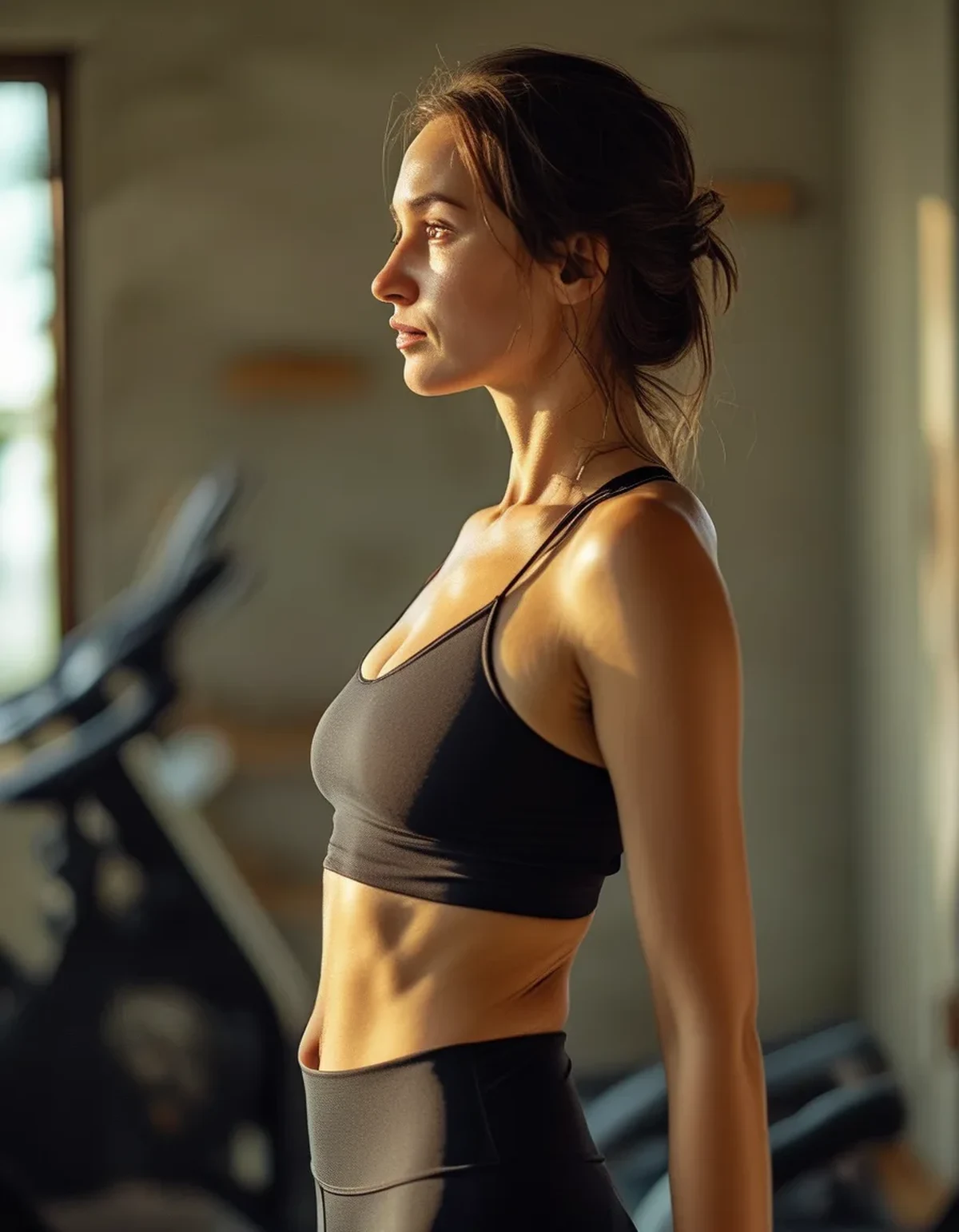
What actually happens when you hinge?
Your torso is not a rigid tube, and the space a waistband occupies changes dramatically with position.
Hip flexion shortens the front of your torso. When you bend forward at the hips, the distance from your lower ribs to the front of your hip crest compresses noticeably — enough that a band designed to span that distance while standing suddenly has more length than space.
Fabric that cannot shorten has to fold. A wide band with nowhere to go buckles, and buckling turns a broad, evenly distributed pressure into a narrow ridge. That ridge is what you feel digging in. The band did not get tighter — it got concentrated.
Your abdomen also changes shape. Bracing for a lift increases intra-abdominal pressure and pushes the abdominal wall outward. Combined with the compressed vertical space, the same fabric now has to accommodate more circumference over less height.
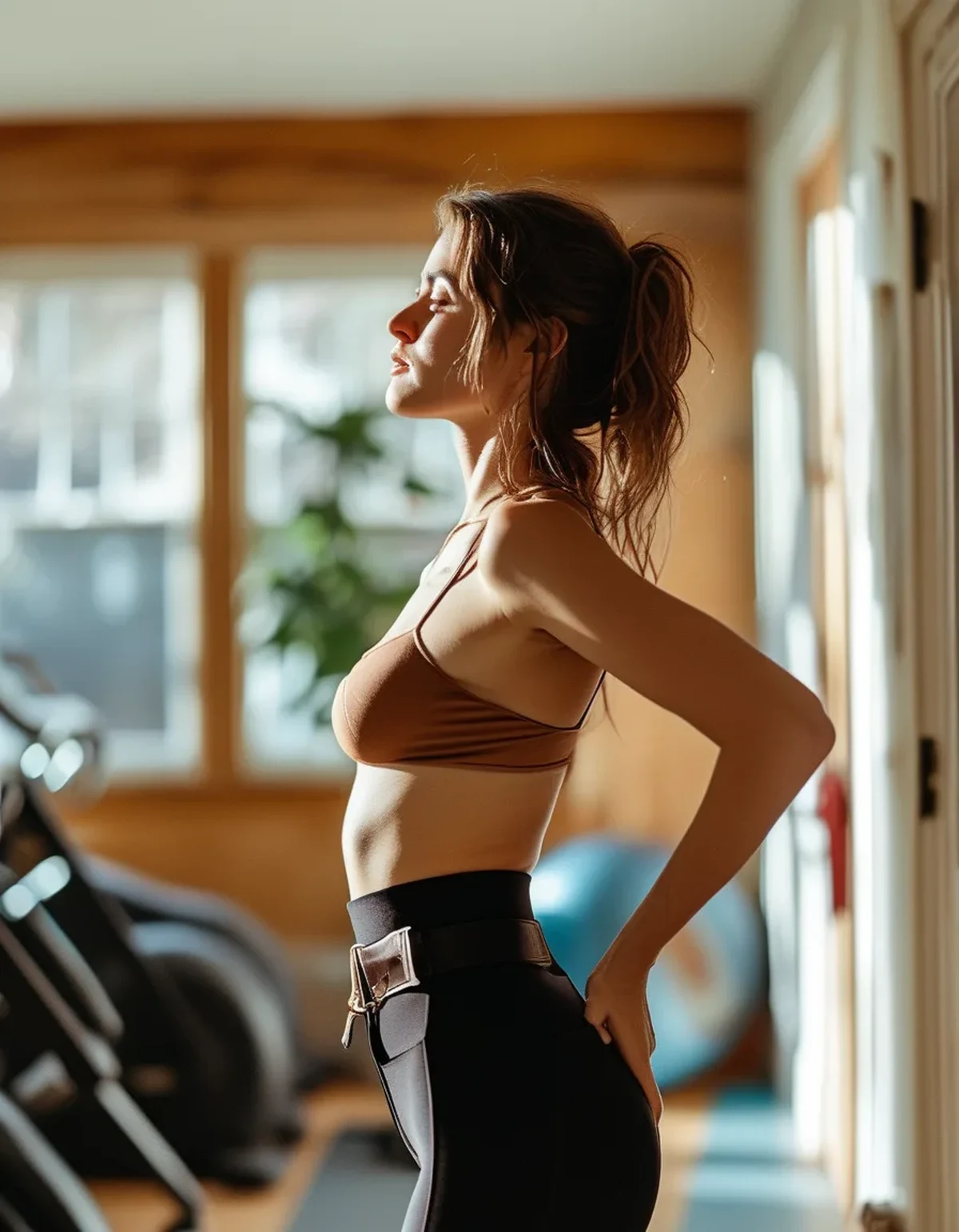
The higher the rise, the worse the effect. A band sitting above the natural waist crosses the softest, most mobile part of the torso and has the greatest distance to lose when you fold. Bands sitting at or just below the natural waist cross a more stable region and compress less.
This is why the problem is movement-specific. Deadlifts, kettlebell swings, good mornings, rowing, seated forward folds and cycling all involve sustained hip flexion. Walking, running and standing lifts barely trigger it.
What makes some waistbands handle it and others not?
The construction details matter far more than the size on the label.
Band width is the biggest variable. Very wide bands distribute pressure well while standing but have more material to fold when you hinge. Bands in the moderate range often perform better in hinge-heavy training than the widest ones, which is counterintuitive if you have been told wider is always more comfortable.
Elastic recovery in the vertical direction matters as much as horizontal. Many waistbands stretch well around the body but have almost no vertical give because of the way they are constructed. A band with some four-way stretch through its height can compress rather than fold.
Internal elastic or drawcords create hard lines. A band with a sewn-in elastic strip or a channel for a cord has a rigid element that cannot compress at all, and that element is exactly where the digging concentrates. For hinge-heavy sessions, seamless or bonded bands behave better.
Horizontal seams are pressure points. A band constructed in two pieces with a horizontal join across the front will fold at that join every time. A contoured or V-shaped front seam distributes the fold rather than concentrating it.
Compression level interacts with everything. A firmly compressive band holds position well but has less capacity to accommodate shape change. A lighter band moves more but folds more gently. Neither is wrong — they suit different sessions.
5 Mistakes That Make Waistband Digging Worse
1. Sizing up to fix it. The obvious move and usually the wrong one. A larger size gives you more circumference, but the vertical compression problem is unchanged, and now the band also slides down during the movement. You end up with digging and rolling instead of just digging.
2. Folding the band over. Doubling the fabric creates a thick, rigid ring at exactly the point where it is already concentrating pressure. It feels like it should help and reliably makes it worse.
3. Wearing the highest rise available for hinge-heavy sessions. An extra-high rise that is genuinely comfortable for walking, yoga or lounging can be the wrong tool for a deadlift day. Matching the rise to the session is a legitimate strategy, not a failure to find the perfect pair.
4. Choosing a stiff, structured band for lifting because it feels supportive standing. Support while standing and comfort while hinging are close to opposite requirements. The band that feels most locked in at the mirror is often the one that cuts in at the bottom of the rep.
5. Assuming the waistband is the whole problem. If the digging comes with a strong sensation of restriction when you brace, the interaction between the band and your bracing pattern is worth a look. Some people brace by pushing the abdominal wall out against whatever is there, and a firm band amplifies that considerably. Trying a session in a lighter band tells you quickly whether that is what is happening.
What should you actually look for?
A short checklist that you can test in a fitting room in about 30 seconds.
Hinge in the changing room, do not just stand. Bend forward at the hips as if picking something off the floor and hold it. If the band folds into a hard ridge, it will do that on every rep. This single test predicts more real-world comfort than anything else.
Then sit down. Seated hip flexion is even more compressive than a standing hinge, and it is where the same problem shows up during commuting, desk work and cycling.
Look for a contoured or curved front rather than a straight horizontal band. Bands cut to follow the natural curve of the torso have less excess length to fold.
Prefer bonded or seamless construction over a sewn channel for anything hinge-heavy.
Check that the band sits at your natural waist, not above it, for lifting. Above-waist rises suit low-impact and lounging far better than they suit hip-dominant training.
Consider a slightly lower rise as your dedicated lifting option. Nothing says every pair has to be the highest rise available, and the pair that works for deadlifts can be different from the pair that works for everything else.
Seasonal note: as training moves indoors through autumn and layering increases, a waistband that has to sit under a longer top or a layered jacket gets less airflow and more friction, and a fold that was tolerable in a single layer becomes noticeable. Testing the hinge with the top you actually train in is worth the extra 20 seconds.
FAQ: High-Rise Waistband Questions, Answered
Does this mean high-rise is the wrong choice?
No. High-rise solves genuine problems — coverage, no gap when bending, no roll-down during most movement. It is specifically sustained hip flexion where the trade-off appears.
Would a size down help?
Almost never for this problem, and it usually creates a new one. The issue is vertical space, not circumference.
Why does it happen more on some days?
Bloating, meal timing, cycle phase and hydration all change abdominal circumference through the day, and a band with limited stretch shows those changes clearly. Many people find the same pair behaves differently morning versus evening.
Are seamless waistbands always better?
For hinging, generally yes, because there is no rigid seam line to fold at. For heavy lifting where you want firm support, some people prefer the structure of a constructed band and accept the fold.
Is the digging harmful?
Uncomfortable rather than harmful in most cases. Persistent numbness, tingling or pain along the front of the thigh is a different matter and worth getting checked. This is general information, not medical advice.
What about wearing them for cycling or rowing?
Both involve sustained hip flexion, so the same rules apply — moderate width, flexible construction, natural-waist rise rather than above it.
TL;DR:
- Hinging compresses the rib-to-hip distance, so a perfectly fitted band has excess length and folds.
- A fold turns broad pressure into a narrow digging ridge. The band is not too tight.
- Sizing up does not fix it — it adds sliding to the problem.
- Look for contoured, bonded or seamless bands with some vertical stretch, sitting at the natural waist.
- Test by hinging and sitting in the changing room, not by standing in front of the mirror.
One pair does not have to do every job. A dedicated hinge-friendly pair solves this permanently.
See It in Motion
Seen here: High Waist Yoga Leggings with Inner Pocket — shop it on bubblelime.com
Keep Reading
This article is for general informational and styling purposes only. Fit, sizing, and product availability may vary.